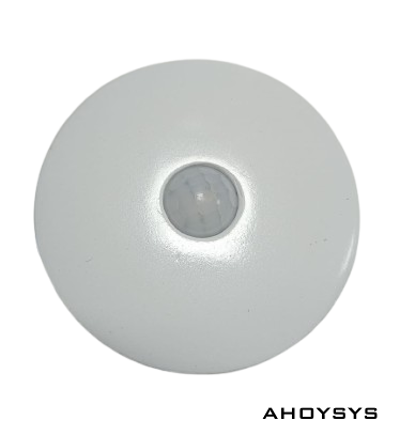
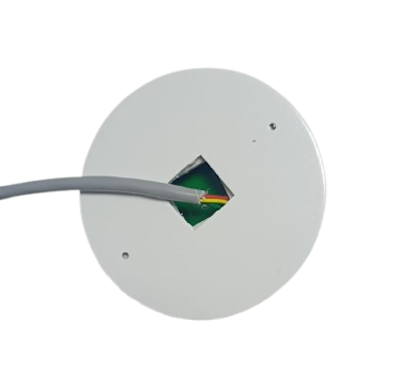
LoRaWAN Desk Occupancy Sensor — Under-Desk
LoRaWAN desk occupancy sensor with Panasonic PIR, under-desk mount, 3-year battery
LoRaWAN Desk Occupancy Sensor — Under-Desk Mount
The MI2LWPIR is a wireless desk occupancy sensor that mounts on the underside of a workstation desk and detects whether the seat is occupied or vacant. It uses a Panasonic PIR element with a 1-metre downward detection cone. When occupancy status changes, the sensor reports immediately over LoRaWAN — no polling delay. Runs on battery for over 3 years.
How It Works
The sensor clips or adheres to the underside of the desk, pointing straight down. The PIR element detects body heat within a 1-metre radius beneath the desk. When someone sits down, the sensor sends an "occupied" event. When the desk has been vacant for the configured dwell time, it sends a "vacant" event. Status changes are reported in near-real time over the LoRaWAN network.
Why LoRaWAN for Desk Sensors?
In large office buildings, connecting hundreds of desk sensors to the corporate WiFi network creates IT security concerns and provisioning overhead. LoRaWAN provides a separate, long-range wireless network — a single multi-channel LoRaWAN gateway covers an entire floor or building. IT teams typically have no objection to LoRaWAN sensors operating alongside their network infrastructure.
Integration
- Building Management System — via standard LoRaWAN network server API
- Desk booking software — live availability feed to workspace management platforms
- Ahoy cloud dashboard — occupancy heatmaps, peak usage analytics, vacant desk finder
- Custom applications — MQTT or HTTP webhooks from the LoRaWAN network server
Use Cases
- Co-working spaces — live seat availability for members and front desk
- Corporate hot-desking environments — real utilisation data versus booking data
- Libraries and study areas — finding available seats across large floors
- Campus and university buildings — occupancy analytics for facilities planning
- Post-occupancy evaluation — identify permanently underused desks and zones for space reconfiguration
Key Specifications
- Sensing: Panasonic PIR — 1m downward detection cone
- Mounting: Underside of desk — pointing downward
- Protocol: LoRaWAN
- Reporting: Event-driven (state change) — near real-time
- Battery life: Over 3 years
- Integration: LoRaWAN network server (any standard NS) → BMS, desk booking, MQTT, HTTP
Hardware Specifications
- Communication
- LoRaWAN 18dBm
- Power Supply
- 5v DC, 1A
- Battery
- 3.7v rechargeable(LI)
- SKU
- MI2LWPIR
 WiFi 2.4Ghz
Desk occupancy sensor - WiFi
Smart desk occupancy sensor for small offices
View Details →
WiFi 2.4Ghz
Desk occupancy sensor - WiFi
Smart desk occupancy sensor for small offices
View Details →